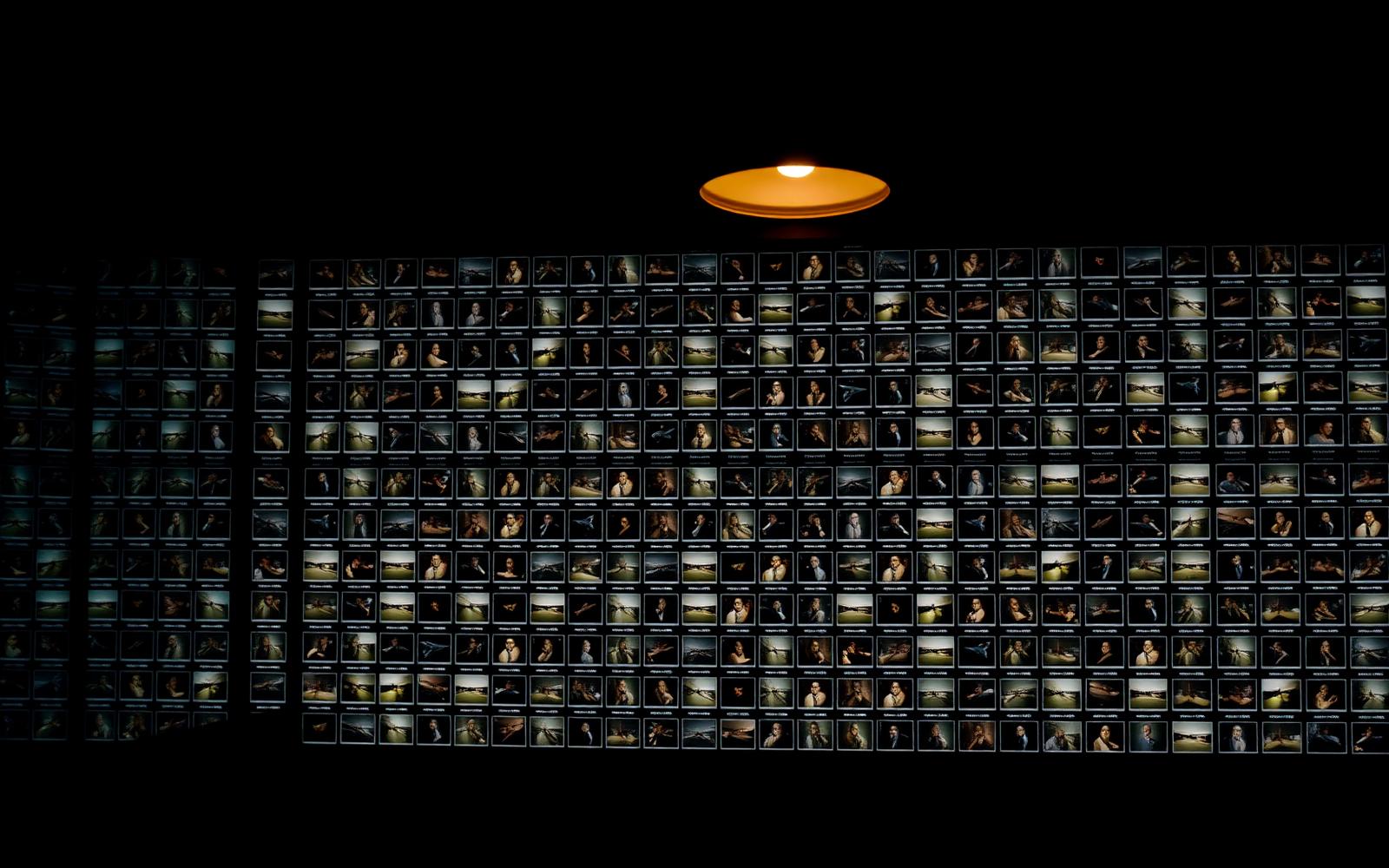
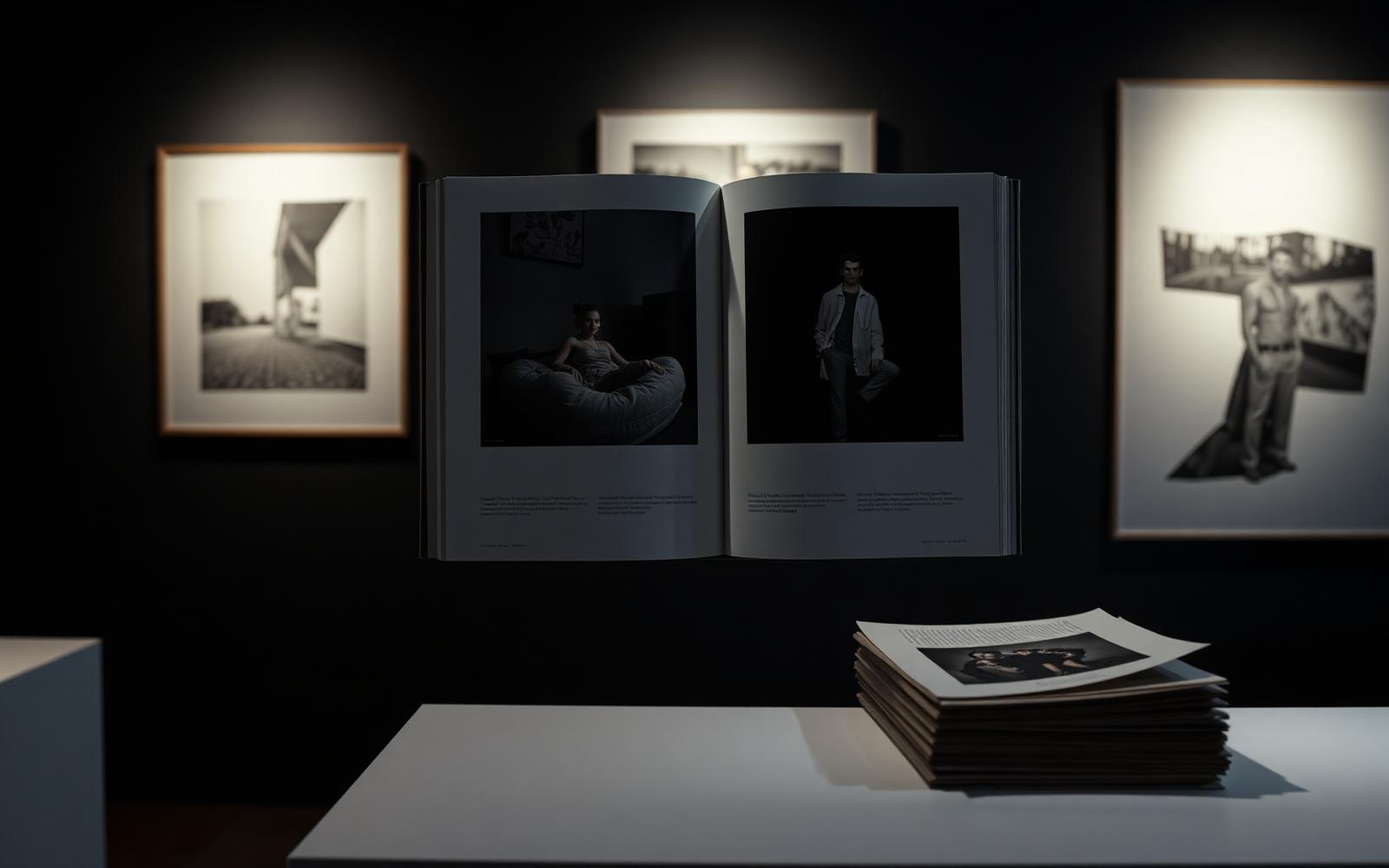
A voice-first creative room over a 62,947-image archive. Four walls — each a specialist — and a single voice named Orion that already knows what everything means. It is what a working AI-native artist's studio wants to be when the archive is bigger than the memory.
This is the true V1 of Redwing Darkroom — the room-as-instrument spec. The current website and live prototype are its interpretation in digital space.
Redwing Darkroom™ — The AI Photographic Workspace · Concept V1
Thesis
The archive is bigger than the memory. The room fixes that.
Every serious AI-native artist has the same problem: tens of thousands of generations, no way back in. Grids fail at scale. Filenames were never the point. The Darkroom is a research prototype that argues the correct interface is not a tool — it is a room, and inside the room the correct verb is speak.
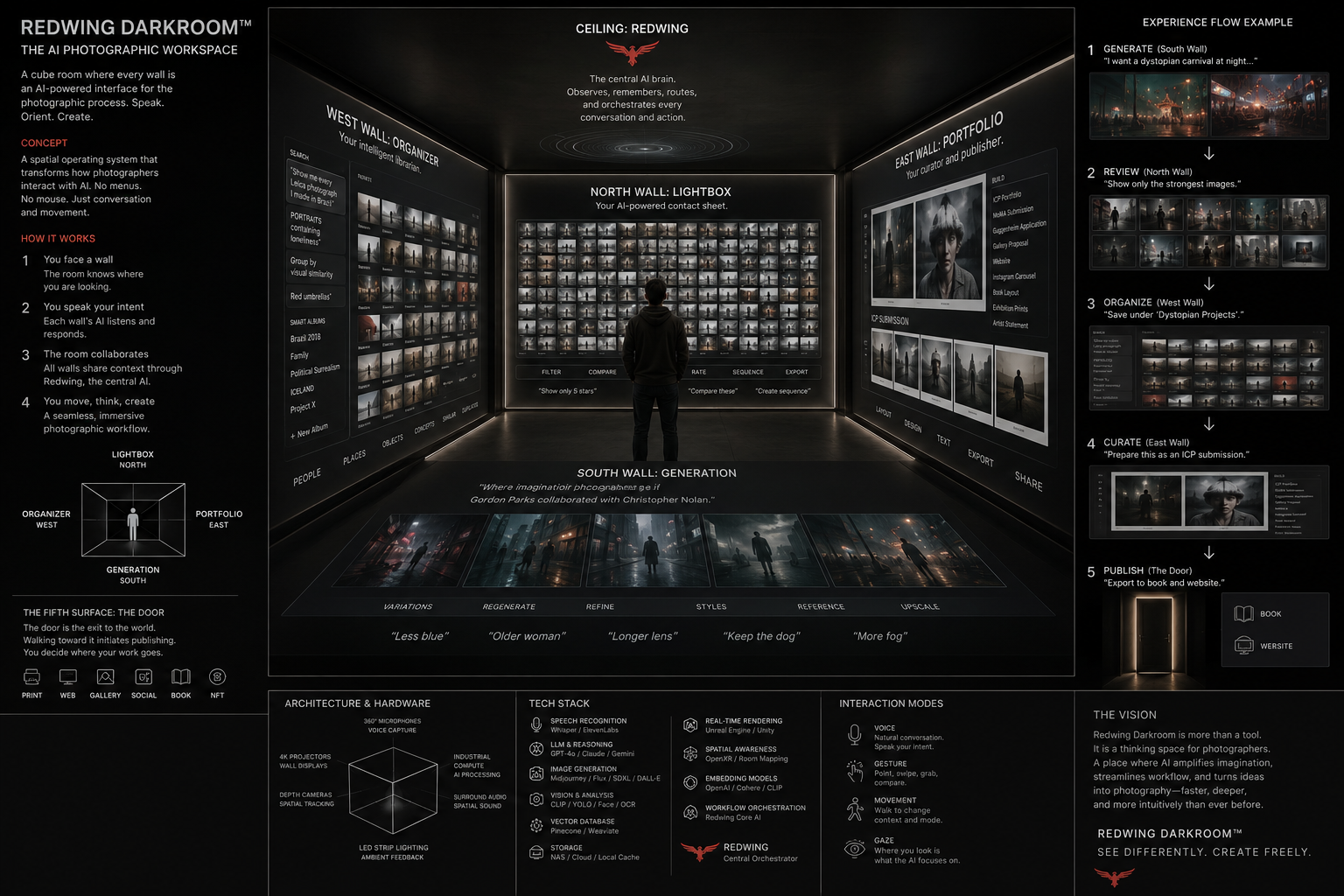
Four walls, each a specialist. A voice — Orion — that already understands what your archive means. A pipeline that ends in a printed book. The room turns a lifetime of frames into an argument you can hand someone.
This page documents the concept, the four walls, and the findings. The live prototype runs against my real Leonardo archive at redwing-darkroom.netlify.app.
The Five Verbs
01
Speak
Voice-first intent — no menus, no filenames.
02
See
The wall you're facing answers, because it knows where you look.
03
Select
Rate, reject, compare — the sheet becomes an argument.
04
Shape
Mutate a frame or mutate the archive.
05
Publish
Sequence enters the book; the book leaves the room.
The Four Walls
Each wall is a specialist — the room knows where you are looking.
Wall I
Organizer
Your intelligent librarian.
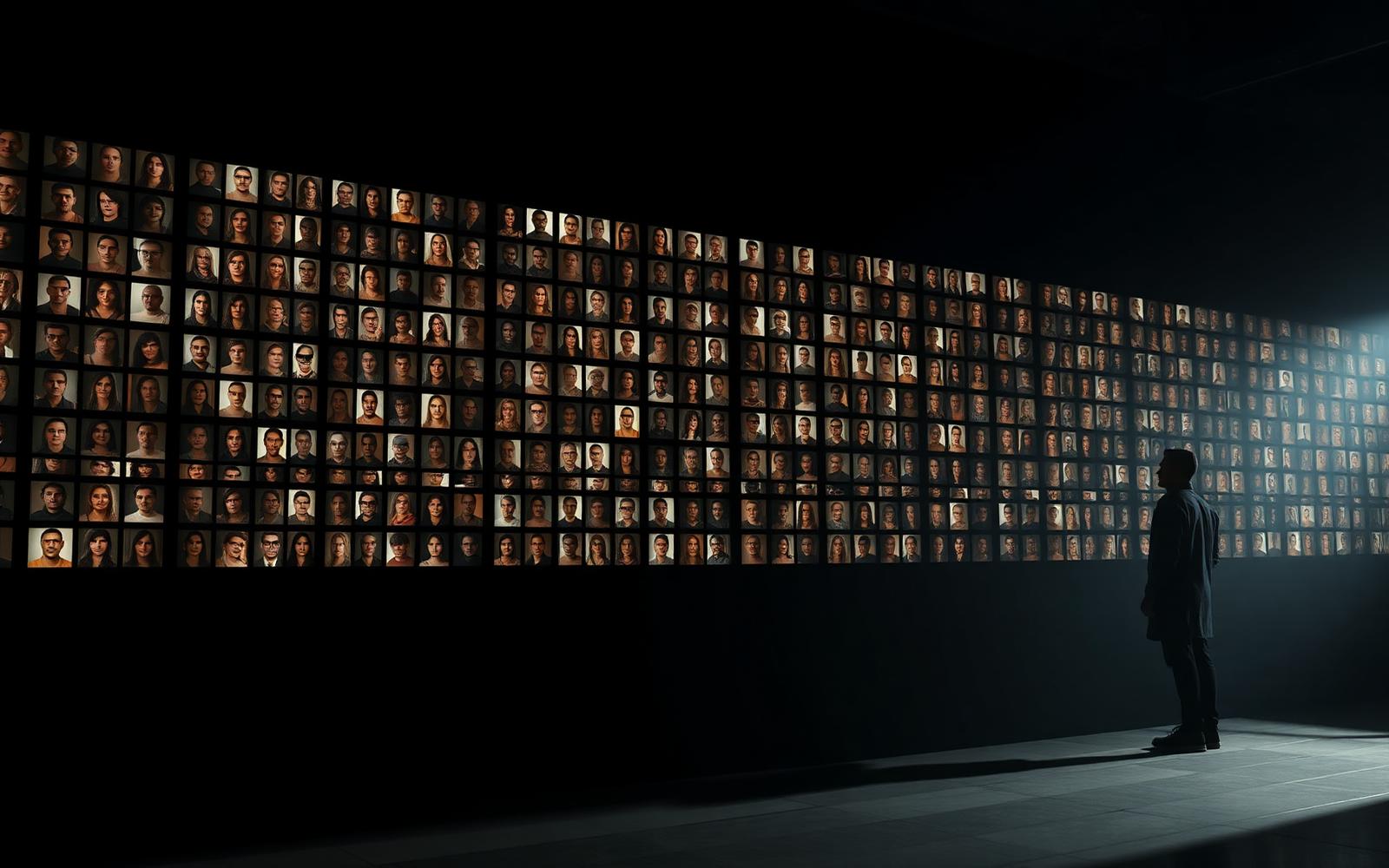
A semantic index — Orion — sits over 62,947 Leonardo generations. You don't remember filenames; you speak intent. "Images that feel like loneliness," "the Memphis work," "a sense of approaching dread." The wall answers with what fits.
Voice + text semantic search across the full archive
Multi-select with keyboard, mouse, or voice
Filter by year, treatment, subject, mood
Send selection straight to the Lightbox
Wall II
Generation
Where imagination becomes photography.
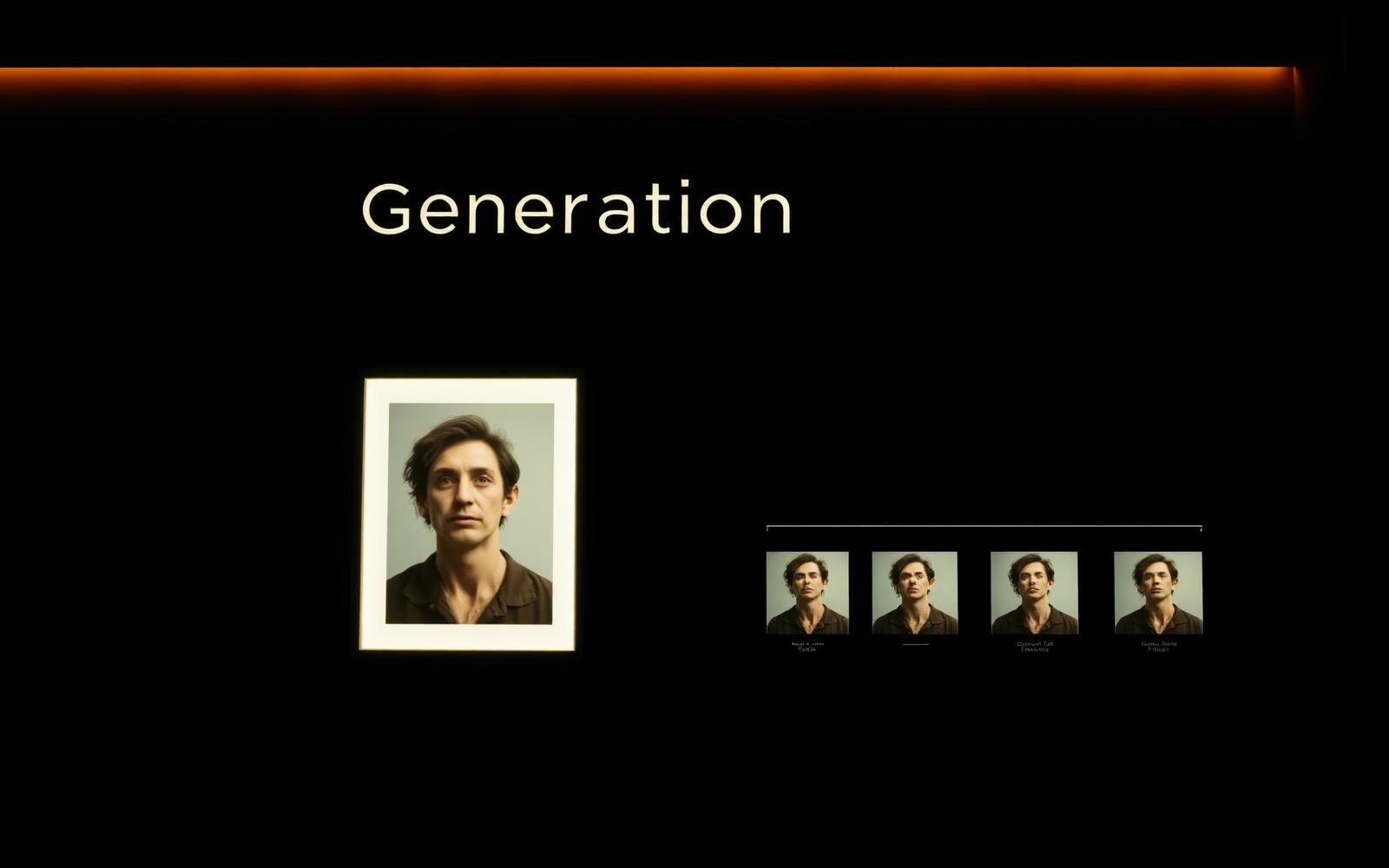
Describe the photograph you can already see. Live FLUX Kontext mutates in place — a revision edits the hero frame, an anchor mutates your archive. In this room, generation is not a slot machine; it is a conversation with a photograph that already exists.
Live FLUX Kontext generation, streamed to the wall
Revision vs. anchor — surgical edit vs. archive mutation
Four variations per pass, batched to the Lightbox
Retrieval-augmented: pulls from your own archive first
Wall III
Lightbox
Your AI-powered contact sheet.
Everything you selected or generated lands here. Rate frames with stars, reject with an X, double-click for the loupe. Ask the room to "find the strongest sequence" and it proposes an edit — the argument the pictures make when they are in the right order.
Star / reject with hover or voice
Compare-2 side-by-side; loupe for detail
Filter to only ★★★★★ before sequencing
"Find strongest sequence" — AI-proposed edit
Wall IV
Portfolio
Your curator and publisher.
The sequence enters the Book Workspace as spreads. Safe-fit, full-bleed, or blank pages; per-page 4K upscale; a written statement. Export a proof PDF, a print-ready pages PDF, and a cover PDF. The room finishes the job — the artifact leaves as a book.
Book Workspace: spreads, guides, auto-arrange
Per-page treatment: safe fit / full bleed / blank
Upscale any page to 4K on demand
Export proof, pages, and cover PDFs; write statement
Under the Hood — Findings
Five things the prototype proved.
01
The archive outgrows memory long before it outgrows meaning — a semantic index is the only realistic entry point.
02
Voice as the primary verb reframes curation as conversation, not clicking.
03
"Wall as specialist" beats a monolithic canvas — each surface refuses work that isn't its own.
04
Revision and mutation must be different gestures; conflating them ruins the archive.
05
The book is the natural stopping condition. Without it the room never closes.
The Darkroom system case study & technical specifications · 2026
Speak · See · Select · Shape · Publish
Every creative tool of the last forty years assumed the artist sits outside the work, operating through a rectangle of menus. The Darkroom inverts the assumption: the artist stands inside the work and speaks. Four walls — Organizer, Generation, Lightbox, Portfolio — and a voice named Orion that routes intent to the wall that owns it.
The system case study documents what shipped in one continuous build cycle: a real archive of 62,947 works, three honest interpretation layers, live Kontext mutation, region-grounded AURA perception with a closed repair loop, a Book Workspace with print-exact geometry, and a Rights-ID custody chain that turns provenance into the product.
The technical specifications describe the next three implementation tracks — AURA persistence & the claim contract, the Fliction 10,528-image archival rescue, and C2PA-signed content credentials — under the same governing principle: a feature is real only when its output is independently verifiable.
Grammar
Speak · See · Select · Shape · Publish
Five verbs, four walls — each surface refuses work that isn't its own